What Water Testing Really Tells You About Commercial Water Quality
Water can look perfectly clean and still have characteristics that matter to a commercial property. A clear glass doesn’t tell you how many dissolved minerals are present, whether sediment is affecting equipment, or whether the water could be corrosive to plumbing. For businesses that depend heavily on water, those details can become important surprisingly quickly.
Restaurants, hotels, offices, healthcare facilities, laundries, and manufacturing sites all have different water needs. A problem that barely matters in one building might cause expensive headaches in another. That’s why good water management usually starts with understanding the water itself rather than immediately buying treatment equipment.
Why Water Testing Should Come First
Water quality can be influenced by the source, local geology, municipal treatment, plumbing, and even seasonal conditions. Two buildings a few miles apart may not necessarily have identical water characteristics.
Testing provides a useful snapshot of what’s happening. Instead of assuming that hard water, sediment, or dissolved solids are responsible for a problem, businesses can investigate the actual conditions.
This matters when choosing treatment equipment. A softener is useful for hardness, but it isn’t designed to solve every water-quality concern. Likewise, a sediment filter won’t address every dissolved substance.
Understanding TDS and Conductivity
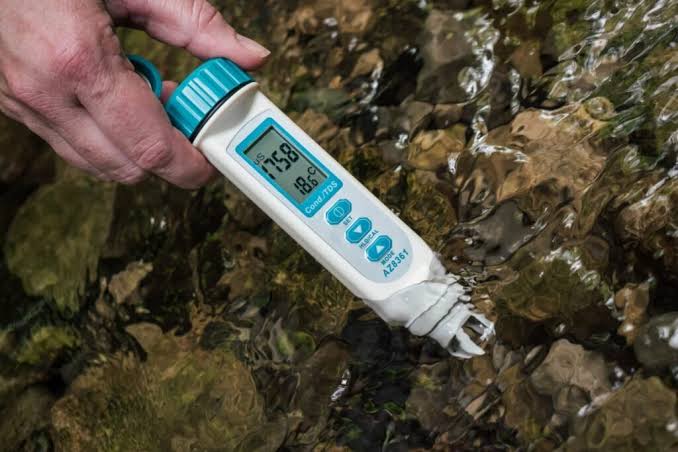
Two measurements that often appear in water analysis are tds and conductivity. They are related, but they aren’t exactly the same thing.
TDS, or total dissolved solids, refers broadly to the amount of dissolved material present in water. Conductivity measures how well the water carries an electrical current, which is influenced by dissolved ions.
These measurements can be useful indicators, but they shouldn’t be treated as a complete description of water quality. A high or low reading doesn’t automatically tell you exactly which substances are present.
For commercial facilities, these numbers can become more meaningful when viewed alongside other test results and the specific needs of the business.
Why Sediment and Turbidity Matter
Water may contain tiny suspended particles that aren’t always obvious to the naked eye. Sediment and turbidity can affect the appearance of water and, in some situations, create operational problems for equipment.
Sediment can collect inside filters, valves, pipes, and appliances. Over time, accumulation may restrict flow or increase the need for cleaning and maintenance.
Turbidity, meanwhile, describes how cloudy or hazy water appears because of suspended particles. Monitoring turbidity can provide useful information about changes in water conditions, particularly when a property relies on a variable water source.
If sediment is a recurring issue, a properly selected filtration system may help. But again, testing first is important because filtration requirements depend on particle size, concentration, and the source of the problem.
The Importance of pH and Corrosivity
Another important part of water analysis is pH and corrosivity. pH describes how acidic or alkaline water is, while corrosivity refers more broadly to the tendency of water to interact with and potentially damage plumbing materials.
Water that is too aggressive toward certain materials can contribute to corrosion over time. That can affect pipes, fixtures, and other components, particularly in older commercial buildings.
Corrosion isn’t always obvious at first. A small change in water chemistry may take considerable time before its effects become visible. Regular inspection and appropriate testing can help identify potential concerns earlier.
How Water Chemistry Affects Equipment
Commercial equipment often has a close relationship with water chemistry. Dishwashers, boilers, water heaters, ice machines, coffee systems, cooling equipment, and laundry machines can all be affected by the water passing through them.
Mineral deposits may interfere with heat transfer. Sediment can collect inside components. Corrosive water can create another set of maintenance concerns.
The important point is that water treatment isn’t simply about making water taste better. In many commercial environments, it can also be part of protecting equipment and keeping operations predictable.
Choosing Treatment Based on Actual Results
Once testing is complete, businesses can make more informed decisions about treatment.
A facility with significant hardness may benefit from commercial water softening. A property dealing with sediment might require staged filtration. Another business could have concerns related to taste, odor, dissolved substances, or pH.
There isn’t much value in installing a complicated system just because it sounds impressive. The better approach is to treat the actual problem.
Proper system sizing matters, too. Equipment should be capable of handling normal and peak water demand without being unnecessarily oversized.
Why Baseline Testing Can Be Useful
One water test provides information about a particular point in time. Keeping those results can make future testing much more useful.
Suppose a business tests its water every year and notices that certain measurements are gradually changing. That trend may provide an early warning that something in the water source, plumbing, or treatment process has changed.
For facilities that depend heavily on water, maintaining records can also make troubleshooting easier. When equipment performance suddenly changes, historical water data may provide another piece of the puzzle.
Testing and Preventive Maintenance Go Together
Water testing works particularly well when it becomes part of a broader maintenance plan. Instead of waiting for equipment to fail, facility managers can monitor water conditions alongside filters, softeners, boilers, and other systems.
This doesn’t mean every business needs to test constantly. The appropriate schedule depends on the water source, property type, equipment, and previous results.
What matters most is having a sensible plan and responding when results show something worth investigating.
A Better Way to Think About Commercial Water
Water management doesn’t need to be complicated. Start with testing, understand the results, and then choose treatment based on what the property actually needs.
Measurements such as TDS, conductivity, turbidity, pH, and other water characteristics can provide valuable clues. None should be considered in isolation, though. The bigger picture matters.
For businesses, that thoughtful approach can help reduce unnecessary equipment purchases, support maintenance planning, and protect water-dependent systems.
In the end, good water treatment isn’t about chasing perfect numbers. It’s about understanding the water well enough to make practical decisions. When businesses know what’s flowing through their pipes, they can respond with confidence instead of guesswork — and that’s a much better place to start.