Clean drinking water is one of those things we tend to take for granted—until the taste changes, the kettle starts collecting scale, or the water report raises a few uncomfortable questions. For many homes, offices, restaurants, and commercial facilities, reverse osmosis has become a practical way to improve water quality.
But choosing an RO system isn’t simply about finding the biggest purifier or buying whatever model happens to be on sale. Water requirements differ. So do available space, daily consumption, source-water quality, and running costs. A system that works beautifully for a small family may be completely unsuitable for a busy commercial facility.
The trick is finding the right balance.
Start With Your Water, Not the Machine
Before comparing specifications, take a moment to understand the water you’re actually dealing with.
Municipal water, borewell water, tanker water, and mixed sources can have very different characteristics. Total dissolved solids, hardness, salinity, and specific contaminants can influence whether RO is appropriate and what supporting filtration stages may be needed.
A water-quality test can remove much of the guesswork. It doesn’t have to be complicated in every situation, but knowing the basic characteristics of your source water gives you a much better starting point.
After all, there’s little sense in choosing a sophisticated treatment system based entirely on assumptions.
Capacity Matters More Than Most People Realise
One of the biggest differences between RO systems is their production capacity. A household purifier may be designed for relatively modest daily consumption, while a hotel, restaurant, hospital, school, or manufacturing facility may need a much larger volume of treated water.
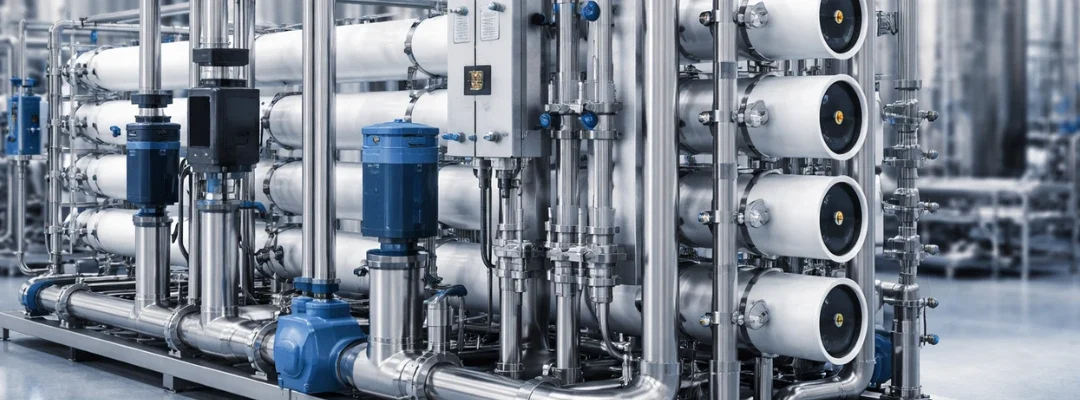
This is where high-capacity ro systems can make practical sense. They’re designed for applications where water demand is consistently higher and interruptions aren’t convenient.
Imagine a restaurant during the lunch rush. The kitchen needs water for drinking, food preparation, cleaning, and other tasks, often all at once. A purifier that struggles to keep up isn’t really saving money if employees are constantly waiting for treated water.
Capacity should therefore be considered alongside peak demand—not just average daily usage.
Bigger Isn’t Always Better
There’s a natural tendency to think that a larger RO system must be better. It sounds logical, but that’s not necessarily true.
Oversizing equipment can mean paying for capacity you don’t actually use. The system still needs installation space, maintenance, replacement filters, and electricity. In some situations, a smaller, properly matched unit can be the smarter choice.
This is particularly relevant for apartments, small offices, clinics, cafés, and other places where water consumption is moderate.
When Space Is Tight, Design Becomes Important
Not every building has a convenient utility room waiting for a water treatment system. Sometimes there’s only a narrow corner under a counter or a small service area available.
That’s where compact ro units can be useful. Their smaller footprint makes them easier to accommodate in locations where a conventional system simply wouldn’t fit comfortably.
But don’t judge a purifier purely by its external dimensions. You also need enough room to access filters, membranes, connections, and other components during maintenance.
A machine that fits perfectly until the first service visit isn’t really a space-saving solution. It’s a headache waiting to happen.
Look Beyond the Purchase Price
The initial price of an RO system gets most of the attention, but it’s only one part of the financial picture.
Think about electricity consumption, membrane replacement, pre-filter changes, cleaning, servicing, reject-water management, and the expected operating life of major components.
A cheaper system can become surprisingly expensive if its consumables need frequent replacement or its efficiency is poor. On the other hand, a higher-quality system may cost more upfront but offer better reliability over several years.
This is why comparing the total cost of ownership can be more useful than comparing purchase prices alone.
Energy Efficiency Is Worth Paying Attention To
RO requires pressure to push water through a semipermeable membrane. That means energy use is part of the equation, particularly in larger installations that operate for long periods.
Modern designs increasingly focus on reducing unnecessary energy consumption and improving water recovery.
For facilities that operate continuously, energy-efficient models can be especially attractive because even modest reductions in electricity use may become significant over time.
Still, don’t get distracted by a single efficiency number. Look at the entire system, including pumps, controls, recovery rate, operating pressure, and maintenance requirements.
Don’t Forget Reject Water
RO doesn’t convert every litre of incoming water into purified water. Some water is discharged as reject or concentrate because the membrane needs to separate and carry away dissolved substances.
How much water is rejected depends on the system design and operating conditions.
For homes and businesses concerned about water conservation, this deserves attention before installation. Some reject water may be suitable for non-drinking uses, such as floor cleaning or gardening, depending on its quality and local practices.
Better recovery can also reduce water wastage, which is increasingly important in areas where water resources are under pressure.
Maintenance Makes a Huge Difference
An RO system isn’t a “fit it and forget it” appliance.
Pre-filters collect sediment and other material. Carbon filters have a limited service life. Membranes can foul or scale. Storage tanks and lines need appropriate cleaning. If maintenance is neglected, water quality and system performance can suffer.
The maintenance schedule should reflect the water source and usage rather than simply following a generic calendar.
A system treating relatively clean municipal water may have very different maintenance needs from one handling challenging borewell water.
Automation Can Make Commercial Systems Easier
For larger installations, automation can simplify daily operation.
Features such as automatic start and stop, tank-level sensing, pressure monitoring, alarms, and protective shutdowns can reduce the amount of manual supervision required.
That’s particularly helpful in businesses where staff already have enough to worry about. Nobody wants an employee checking a purifier every hour when a properly designed control system could handle much of the routine monitoring.
Of course, automation doesn’t replace maintenance or professional inspection. It simply makes operation more manageable.
Choosing With the Long Term in Mind
The best RO system isn’t necessarily the most powerful, smallest, or cheapest one. It’s the one that matches your actual needs.
Start with water quality. Estimate average and peak consumption. Consider the available installation space. Check energy use and recovery performance. Ask about replacement parts and servicing. And, importantly, make sure the supplier can support the system after installation.
A purifier is a long-term piece of equipment, not just another appliance sitting quietly in the corner.
When the capacity is right, the design suits the space, and operating costs remain sensible, an RO system can become something wonderfully boring—which, honestly, is exactly what you want from water treatment.
You turn the tap on, fill the glass, and don’t have to think twice.