Hard water has a way of making simple household tasks more complicated than they should be. Glasses come out of the dishwasher looking cloudy, bathroom fixtures develop stubborn white deposits, and freshly washed towels sometimes feel disappointingly rough. You might not think much about these problems individually, but dealing with them week after week gets tiring.
Investing in appropriate water treatment for hard water can help homeowners address the underlying mineral content responsible for many of these everyday inconveniences.
For families throughout the Treasure Valley, finding a practical solution begins with understanding their water supply. Rather than constantly purchasing cleaning products or replacing affected fixtures, it makes sense to explore treatment methods that tackle the problem at its source.
Why Hard Water Is Such a Common Household Concern
Water naturally collects dissolved minerals as it moves through underground soil and rock formations. Calcium and magnesium are primarily responsible for determining how hard water becomes.
Although hard water isn’t generally harmful to health on its own, it can create numerous household maintenance challenges.
When water evaporates, dissolved minerals remain behind. That’s what causes those familiar white marks around bathroom faucets, shower doors, and kitchen sinks.
Heating water can also encourage mineral deposits to form inside certain appliances.
Related insight Living with Well Water: Why Understanding Your Water
Households across Boise, Meridian, Nampa, and neighboring communities may experience different hardness levels depending on their water source.
A simple hardness test provides a useful starting point for understanding whether these minerals are contributing to your household frustrations.
How Water Softening Addresses the Underlying Problem
Cleaning mineral deposits might temporarily improve the appearance of your bathroom, but it won’t change the characteristics of incoming water.
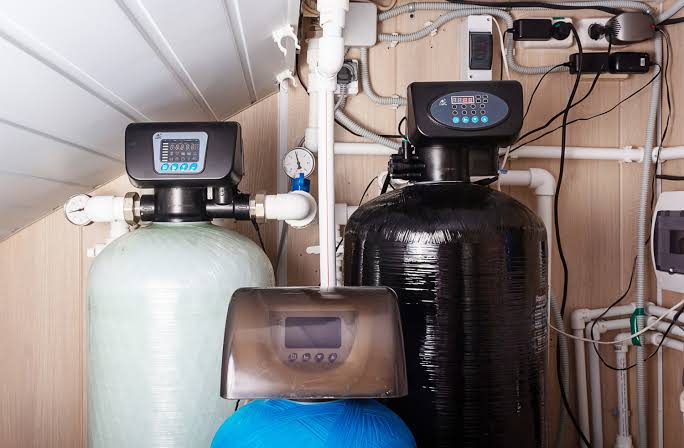
Traditional softening systems for household water address excessive hardness through a process called ion exchange, which reduces dissolved calcium and magnesium before they contribute to new mineral accumulation.
Inside a conventional softener, specialized resin beads capture hardness minerals while exchanging them for sodium or potassium ions.
The resin periodically undergoes regeneration to restore its treatment capacity.
For households experiencing significant hardness, suitable softening can help improve soap performance and reduce new scale formation.
Related insight Keeping Your Water Treatment System Reliable With the
It’s a practical approach that focuses on preventing recurring problems instead of repeatedly cleaning up after them.
Choosing a Softener That Matches Your Family’s Needs
Buying water treatment equipment can feel overwhelming, particularly when several products promise similar benefits.
When comparing water softener options for homeowners, consider measured hardness levels, daily water consumption, peak flow requirements, available installation space, and ongoing operating expenses.
A large family with several bathrooms will naturally have different requirements from someone living alone.
Undersized equipment may regenerate too frequently or create unnecessary flow restrictions. Oversized systems could increase initial expenses without providing meaningful additional benefits.
Properties relying on private wells may also require preliminary treatment if elevated iron concentrations interfere with softener performance.
Taking these factors into account helps ensure your equipment works comfortably alongside your existing plumbing and household routine.
Related insight Practical Water Treatment Solutions for Homes, Businesses, and
What Softer Water Can Mean for Your Everyday Routine
Some improvements around the home are immediately noticeable. Others become apparent gradually, through ordinary experiences.
With appropriately softened water, soap may lather more easily, freshly washed clothes may feel different, and bathroom fixtures may require less frequent descaling.
You might also discover that you’re using more detergent than necessary simply because that’s what you’ve always done.
Adjusting your cleaning habits to accommodate softer water can help reduce unnecessary product consumption.
And then there’s the shower door. Anyone who’s spent considerable time scrubbing stubborn white deposits will appreciate having fewer new mineral marks to deal with.
These little conveniences might not sound particularly impressive, but they can make household chores noticeably less frustrating.
Protecting the Appliances You Depend on Every Day
Water heaters, dishwashers, and washing machines are essential household investments. Unfortunately, excessive hardness can contribute to mineral accumulation inside certain components.
Related insight What Water Testing Really Tells You About Commercial
Scale deposits may interfere with heat transfer, particularly in equipment that heats water regularly.
Appropriate softening can help limit new deposits, potentially supporting appliance performance and reducing certain maintenance requirements.
However, it’s important to maintain realistic expectations. Installing a softener won’t automatically remove all existing scale or repair damaged appliance components.
Regular servicing remains necessary.
Think of water softening as another way to look after the equipment you’ve already invested in, rather than waiting for mineral-related problems to become expensive inconveniences.
Understanding Maintenance and Long-Term Operating Costs
A water softener isn’t something you install and completely forget about. Traditional systems require occasional salt replenishment, appropriate regeneration settings, and routine maintenance.
Before purchasing equipment, ask about salt consumption, regeneration water usage, replacement components, and servicing expenses.
Related insight Understanding Reverse Osmosis Filtration and Its Benefits for
Demand-initiated regeneration systems may offer practical advantages by regenerating according to actual water consumption rather than relying entirely on a fixed schedule.
It’s also worth checking whether the installation location allows convenient access for maintenance.
Remember that softening alone doesn’t provide comprehensive drinking water purification. Additional filtration or specialized treatment may be appropriate depending on your water quality.
Periodic hardness testing can help confirm that your system continues performing effectively.
Making Your Home More Comfortable, One Improvement at a Time
Living in the Treasure Valley offers plenty of opportunities to spend your weekends doing something more enjoyable than removing stubborn mineral deposits.
Addressing excessive hardness doesn’t need to become an overwhelming home improvement project. Begin with reliable testing, understand your household’s requirements, and choose treatment equipment that offers practical long-term value.
A carefully selected water softener can quietly improve everyday experiences while helping reduce certain mineral-related maintenance concerns.
Sometimes, a worthwhile household upgrade isn’t about making your home look more impressive. It’s about making life inside it a little easier.
Fewer frustrating cleaning tasks, better soap performance, and less time worrying about mineral buildup are certainly benefits worth considering.